Ecological implications of the dietary habits of the wild boar in temperate subantarctic forests: a new perspective
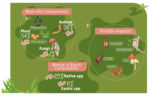
Oscar Skewes, Camila Castro, Oscar Peña, Javiera CalvoThe wild boar, an exotic species in South American temperate forests, has shown an expanding distribution; however, their diet remains largely elusive. This study aimed to fill this gap by examining the diet of wild boars in new locations and seasons in Chile. We analyzed the contents of 35 wild boar stomachs, identifying and quantifying the occurrence of animal, plant, and fungi items. Our results revealed a diverse diet, with plant species representing 54.5% of the diet, fungi 7%, and animals 38.1%. The most consumed species were Gunnera tinctoria (45.7%), Hylamorpha elegans (25.7%), and Gevuina avellana (17.1%). Interestingly, we found that the consumption of fungal species occurred primarily in winter and spring. Conversely, wild boars were observed to consume vegetables predominantly during winter and autumn, shifting to a higher percentage of animal species in spring and summer. We found that 89.9% of the diet of the wild boar consisted of native elements, suggesting an extensive use of food resources within the temperate rainforest. Alarmingly, our study also identified the consumption of endangered species: Chiasognathus grantii, Acanthinodera cumminguii. The predation of the endangered Dromiciops gliroides and Eupsophus roseus is not conclusive. Our study provides new insights into the dietary habits of the wild boar in Chile and highlights its extensive use of native food resources, including several endangered species, and underscores the potential ecological impact of the expanding distribution of the wild boar, suggesting a significant threat to the conservation of these species. Further research is needed to fully understand the ecological implications of these findings and to develop effective management strategies.
Implicancias ecológicas de los hábitos dietarios del jabalí en bosques templados subantárticos: una nueva perspectiva. El jabalí, especie exótica, expande su distribución en los bosques templados de América del Sur; sin embargo, su dieta sigue siendo en gran medida desconocida. El presente estudio tuvo como objetivo llenar este vacío, examinando la dieta de jabalíes en nuevas ubicaciones y temporadas en Chile. Analizamos el contenido de 35 estómagos de jabalí, e identificamos y cuantificamos la presencia de elementos animales, vegetales y fúngicos. Nuestros resultados revelaron una dieta diversa, con especies vegetales que representan el 54,5% de esta, hongos el 7% y animales el 38,1%. Las especies más consumidas fueron Gunnera tinctoria (45,7%), Hylamorpha elegans (25,7%) y Gevuina avellana (17,1%). Curiosamente, encontramos que el consumo de hongos se produjo principalmente en invierno y primavera. Por el contrario, se observó que los jabalíes consumían vegetales predominantemente durante el invierno y el otoño, pasando a un mayor porcentaje de especies animales en primavera y verano. Encontramos que el 89,9% de la dieta del jabalí consistía en elementos nativos, lo que sugiere un uso extensivo de los recursos alimentarios dentro del bosque lluvioso templado. De manera preocupante, nuestro estudio también identificó el consumo de especies en peligro de extinción, como Chiasognathus grantii y Acanthinodera cumminguii. La depredación sobre Dromiciops gliroides y Eupsophus roseus no es concluyente. Nuestro estudio destaca el uso extensivo de recursos alimentarios nativos, incluidas varias especies en peligro de extinción, lo que sugiere una amenaza significativa para la conservación de estas especies. Se necesitan más investigaciones para comprender completamente las implicaciones ecológicas de estos hallazgos y desarrollar estrategias de gestión efectivas.